
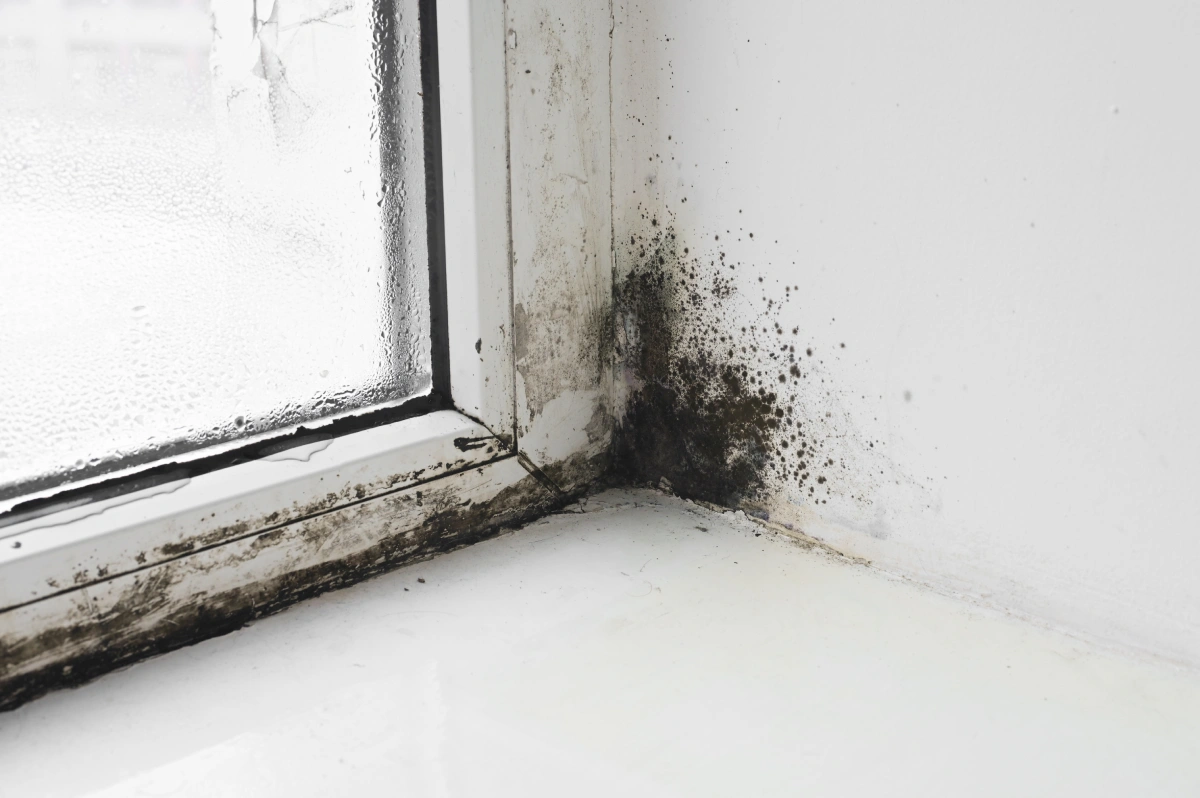
A musty smell. Dark speckled patches that weren’t there last month. That’s black mold, and it doesn’t get better on its own. It gets worse, fast, especially in a Florida house where the AC is fighting humidity year round. Professional black mold removal is the fix, but only if it happens early enough. Here’s how to spot it, why removal by itself often isn’t enough, and what it can actually do to your health if it sits.
How to Identify Black Mold Before It Becomes a Bigger Problem
Dark green. Black. Sometimes a greenish-black that’s almost hard to describe until you’ve seen it once. Slimy or fuzzy depending on how wet it’s been. And that smell, musty, earthy, the kind that doesn’t go away even after you wipe the spot down. Bathroom ceilings, under sinks, behind the washer, inside an AC closet: that’s where it tends to show up first.
Honestly, the smell usually beats the visual by a few weeks. You notice something’s off before you ever see a patch, and it’s tempting to blame humidity, because South Florida is humid, so why wouldn’t it be that. Then a spot shows up on the window sill after a storm, or the shower grout that never quite dries between uses, or in a box that got a little damp in the garage last hurricane season. A lot of people end up searching how to remove black mold from shower grout specifically, since that’s usually ground zero.
| Location | Common Cause | What to Look For |
|---|---|---|
| Bathroom ceilings and grout | Constant humidity, poor ventilation | Dark speckling, persistent musty smell |
| Under kitchen and bathroom sinks | Slow leaks that go unnoticed | Warped cabinet wood, water stains |
| AC closets and vents | Condensation buildup | Musty odor near vents, visible spotting |
| Window sills and frames | Trapped moisture after storms | Discoloration, soft or swollen wood |
| Garage and storage areas | Flooding, humidity, poor airflow | Mold on boxes, fabric, or drywall |
Not everything dark is black mold, to be fair. Mildew looks similar. So does plain old dirt buildup, honestly. Guessing wrong either way just burns time. A mold inspection company can tell you for sure with an air sample or a swab, way faster than a week of scrubbing something that just keeps coming back. Booking mold testing and remediation as one trip instead of two saves a callback.
The house that catches a quarter-sized spot behind the washer skips the whole conversation about tearing out a wall six months from now.
Black Mold Removal vs. Remediation: Understanding the Right Approach
Removal wipes off what you can see. Remediation goes after why it’s there in the first place, the moisture, seals off the work area, and treats what’s underneath so it doesn’t just come back next season. Past a small isolated spot, remediation’s really the only approach worth doing.
A can of spray from the hardware store works fine on a small patch of tile. Once spores get into drywall paper or wood, that same spray does almost nothing, and using it in a closed bathroom just kicks more spores into the air you’re standing in. A black mold removal company that knows what it’s doing starts differently, seal the room first, then start removing.
- Containment barriers keeping spores out of the rest of the house while work’s underway
- HEPA air scrubbers running the whole job to pull spores out of the air
- Air testing once it’s done, to confirm the space is actually clear and not just clean-looking
Cost is where a lot of people hesitate, understandably. Black mold remediation cost swings a good bit based on how far it spread and what has to be replaced, but any licensed company should walk you through that after an actual inspection, not a guess over the phone. Worth knowing too: not all black mold removal companies handle the remediation side the same way. Ask upfront whether containment and post-job testing are even included.
Homes that call for black mold removal services instead of grabbing another spray bottle are usually the ones that don’t call back next season.
Health Risks of Black Mold Exposure and Why Immediate Action Matters
Respiratory irritation. Coughing. Headaches that show up out of nowhere. Allergy or asthma symptoms getting worse for no obvious reason. That’s black mold exposure, and kids, older adults, and anyone with existing respiratory issues feel it hardest. It tends to creep in slowly enough that people blame allergies, or a cold that just won’t quit, long before anyone connects it to mold somewhere in the house.
Here’s the thing about exposure: it doesn’t always announce itself. Maybe you get more headaches at home than you do at work. Maybe a cough clears up on vacation and comes right back the day you’re home again. Small patterns like that are worth paying attention to, especially if the house has any history of water damage or a bathroom that never seems to fully dry out.
- Mold allergy remedies, antihistamines and the like, ease symptoms without touching the actual source
- A mold testing company can confirm spore counts and point to which rooms need attention first
Waiting doesn’t help. The longer it sits, the more spores build up in fabric, insulation, ductwork, everywhere air moves through the house. So the health impact doesn’t reset just because someone got over a cold. Remedies for mold exposure, an air purifier, antihistamines, staying out of the room, those just manage symptoms. None of it solves anything until the mold’s actually gone.
A family that acts on the first pattern of headaches, not the fifth, is the one that skips months of feeling off without ever figuring out why.
Frequently Asked Questions
How can I tell if it’s black mold or just regular mildew?
Black mold usually reads darker, almost black or a deep green, with texture to it, slimy or fuzzy. Mildew tends to stay lighter, gray or white, and sits flatter on the surface. Smell’s often the real giveaway since black mold carries a stronger, muskier odor that sticks around. When you’re not sure, a mold testing company can confirm it with a swab or air sample instead of a guess, and it matters because the two need different responses entirely.
Is it safe to remove black mold myself?
A small spot on tile or another hard surface, sure, a household cleaner and an open window usually handles it fine. Once it’s bigger than about ten square feet, or it’s come back after you already cleaned it, that’s professional black mold removal territory. Disturbing a bigger patch without containment can push spores into the air and expose whoever’s cleaning to more than they started with. That’s exactly what remediation protocols exist to stop.
What does black mold exposure actually feel like?
It builds gradually. A cough that won’t quite go away. Headaches with no clear cause. Itchy eyes, or allergy symptoms that seem to flare up specifically at home and nowhere else. People with asthma often notice things get worse indoors and better the moment they leave. Remedies for mold exposure, antihistamines, an air purifier, can take the edge off for a while, but none of it touches the mold actually sitting in the house.
How much does black mold remediation cost?
Black mold remediation cost really depends on how far it’s spread and whether drywall or subflooring needs to come out entirely. A small, contained spot costs a lot less than something spanning multiple rooms or hiding behind walls where nobody’s looked yet. Most companies won’t quote a number over the phone, they’ll want eyes on it first, since the real price depends on what the crew actually finds once they’re inside.
When should I call a professional instead of handling it myself?
Sooner is better, always, if the mold’s more than a small patch, keeps coming back, or you’re smelling it without seeing it yet. Anyone in the house dealing with new headaches or worse asthma symptoms is also a sign to skip the DIY route entirely. Mold inspection and remediation handled together from day one tends to solve things faster than a few rounds of removal on your own first.