
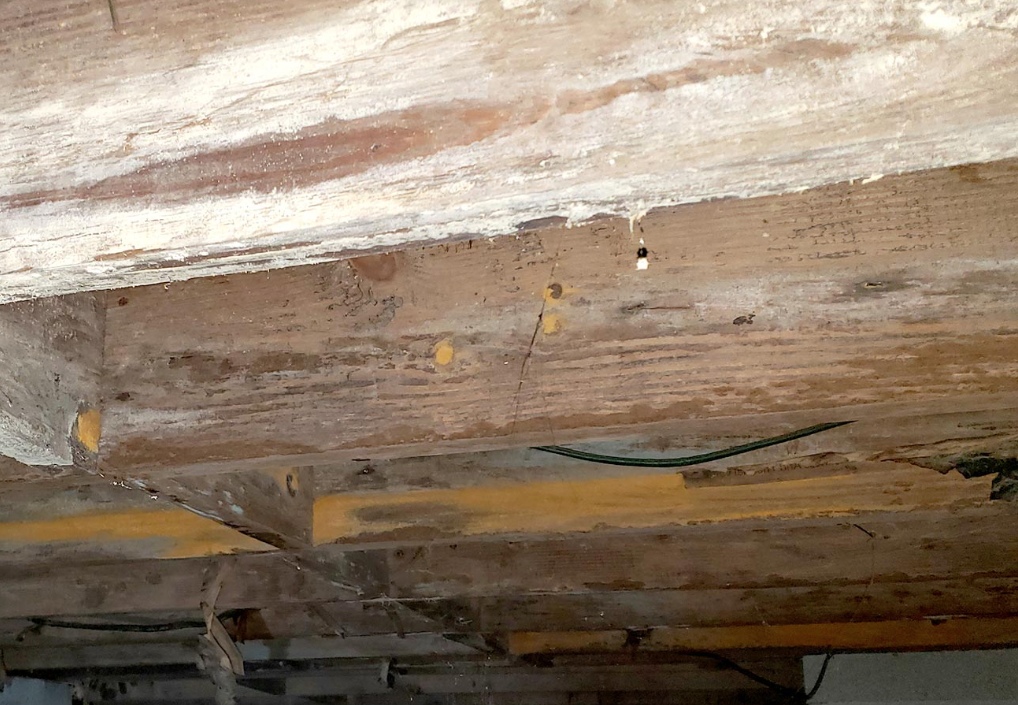
Crawl space mold does damage you don’t see until it’s already affecting the rest of the house, since air from underneath a home moves upward into living spaces through what’s called the stack effect. That’s how a moisture problem under the floor turns into an air quality complaint two stories up. Below, we get into why it spreads faster than most homeowners expect, what removal looks like in a climate like South Florida’s, and what a proper inspection actually finds.
Why Crawl Space Mold Spreads Faster Than You Think, and How to Stop It
Crawl space mold spreads fast because the space underneath a house traps humidity with almost no airflow to dry it out, and that damp, dark, still air is exactly what mold needs to take off. In Florida, ground moisture pushes up through the soil constantly, so a crawl space can stay wet even during a dry stretch above ground. Professional mold remediation for a crawl space always starts with controlling that moisture, not just treating what’s already growing.
Most homeowners never look under their own house, which is fair, it’s not exactly an inviting space. But that’s part of the problem. Mold can cover a support beam or duct insulation for months before anyone notices, and by the time it’s visible from the crawl space entrance, it’s usually already spread further than that first look suggests.
| Moisture Source | Why It Happens | Typical Fix |
|---|---|---|
| Ground moisture | No vapor barrier, or bare soil exposed | Install a sealed vapor barrier |
| Poor ventilation | Vents blocked, undersized, or poorly placed | Add or reposition vents, or consider encapsulation |
| Plumbing leaks | Pipes running through the space develop slow leaks | Repair the leak, dry the area, treat affected wood |
| HVAC condensation | Ductwork sweats in a humid, unconditioned space | Insulate ductwork, seal duct joints |
| Standing water after rain | Poor grading or drainage around the foundation | Improve exterior drainage, add a sump pump if needed |
The stack effect makes this worse than people realize. Warm air rises through a house and pulls air up from below to replace it, including whatever’s floating around in the crawl space. That means mold spores from under the floor can end up circulating through bedrooms and living rooms without anyone tracing the smell back to where it started.
A crawl space that gets checked twice a year catches a small patch. One that never gets checked eventually gets a much bigger bill.
Crawl Space Mold Removal in South Florida’s High-Humidity Climate
Crawl space mold removal in South Florida has to account for humidity that doesn’t let up for most of the year, which means removal alone rarely holds unless it’s paired with a real moisture control plan. A crew doing crawl space mold removal here typically installs or repairs a vapor barrier and improves ventilation as part of the same job, not as a separate upsell.
Pulling mold off a joist or subfloor is the easy part, honestly. The harder part is making sure it doesn’t come right back within a season, which is exactly what happens if nobody addresses why the space stayed wet in the first place. A vapor barrier that’s torn, gapped, or just missing entirely lets ground moisture keep feeding the same problem indefinitely. When it comes to mold in crawl space removal specifically, moisture control matters just as much as the cleanup itself.
- Crawl space mold removal cost typically includes both remediation and moisture control, not remediation alone
- Encapsulation, sealing the space with a heavy-duty vapor barrier, is often recommended for homes with recurring issues, and a mold encapsulation company can handle that as its own service
A mold remediation company that’s actually dealt with South Florida crawl spaces will usually recommend a dehumidifier or improved vent placement alongside the cleanup itself. Skipping that step to save money upfront tends to cost more later, since a crawl space mold removal company coming back out twice in two years costs more than doing it right the first time.
The houses that stay clean under the floor are the ones where somebody addressed the humidity, not just the mold sitting on top of it.
What a Crawl Space Mold Inspection Reveals About Your Home’s Air Quality
A crawl space mold inspection reveals how much of the mold under a house is actually making it into the air people breathe upstairs, using air sampling to compare spore counts in the crawl space against the living areas above. A meaningful difference between the two usually confirms the crawl space as the source, even if nobody’s noticed a smell yet.
Most people call for an inspection because of a symptom: a musty smell, someone’s allergies acting up more at home than anywhere else, never quite placing where it’s coming from. A mold inspection company can usually trace that back to the crawl space faster than guessing room by room upstairs, since the source is often nowhere near where the smell is strongest. Crawlspace mold remediation in older South Florida homes especially tends to uncover more than just the mold itself.
- Air sampling above and below the floor to compare spore counts directly
- A visual inspection of insulation, ductwork, and support beams for moisture damage
A mold testing company will typically flag more than just active mold too. Moisture readings on wood framing, signs of past water intrusion, condensation on ductwork, all of that points toward conditions that’ll cause a repeat problem even if the current mold gets fully removed. A mold remediation specialist reading that report can tell you not just what’s there now, but what’s likely coming back. Residential mold remediation done well accounts for both.
The inspection that actually helps is the one that explains why the mold showed up, not just where it is.
Frequently Asked Questions
How do I know if I have mold in my crawl space?
A musty smell in the house that seems to come from nowhere specific is often the first sign, especially if it’s stronger near vents or on the ground floor. Visible mold on floor joists or ductwork, if you’ve actually looked, is the more obvious confirmation. Since most homeowners never inspect a crawl space directly, a professional crawl space mold inspection is usually the fastest way to know for sure rather than guessing based on smell alone.
How much does crawl space mold removal cost?
Crawl space mold removal cost depends on how much of the space is affected and whether moisture control work, like a new vapor barrier or added ventilation, needs to happen alongside the cleanup. A small, contained patch costs a lot less than a crawl space with widespread growth and standing moisture. Most crawl space mold removal companies provide an estimate after physically inspecting the space, since access and square footage both affect the price.
Can I remove crawl space mold myself?
A very small, isolated spot on an easily accessible beam might be manageable with basic precautions, but most crawl space mold sits in tight, poorly lit spaces that make DIY work both difficult and risky from a respiratory standpoint. Without fixing the underlying moisture problem, any DIY cleaning tends to be temporary anyway. Crawl space mold removal services typically address the moisture source at the same time, which is the part a spray bottle alone won’t fix.
How can I prevent mold from coming back in my crawl space?
Controlling moisture is the real fix, which usually means a properly sealed vapor barrier, adequate ventilation, and sometimes a dedicated dehumidifier for especially damp crawl spaces. Regular inspections, once or twice a year, catch small issues before they turn into full remediation jobs. A mold remediation company familiar with South Florida homes can recommend the right combination based on how your specific crawl space is ventilated and how high the water table runs nearby.
Does crawl space mold actually affect the air quality upstairs?
Yes, more than most homeowners expect. Air moves from the crawl space into the living areas above through a phenomenon called the stack effect, carrying mold spores along with it even without any obvious connection between the two spaces. A crawl space mold inspection that includes air sampling can confirm how much of that spore load is actually reaching the rooms people spend time in, rather than staying contained underneath the house.